Cara Coleman is a nationally recognized family partner, speaker, medical educator, attorney, writer, and advocate for children with disabilities and medical complexity and their families. Cara is the founder of The Bluebird Way Foundation, an organization dedicated to using the arts, humanities, storytelling, and narrative medicine to build understanding, connection, and change in healthcare and health profession education. Cara is a grantee and partner of the Lucile Packard Foundation for Children’s Health, strengthening our family partnership work through projects such as the Family-Led Academic Grand Rounds for Pediatrics.
This Impact Story is a commentary on the JAMA Pediatrics article, Measuring Childhood Disability Using the National Health Interview Survey, published by Foundation grantee the DIVERSE Collective. Cara highlights parents’ varied perspectives on how the measurement of disability impacts the lives of children and their families. Please refer to the journal article for more detail on the research findings.
More than a Measure: How Disability Identification Shapes the Lives of Children and Families
When my daughter was born, a parade of diagnoses followed her. Throughout her over two-month neonatal intensive care unit (NICU) stay, the parade seemed to grow daily. A parade of words I could barely spell or pronounce, and all I wanted to really know was what they had to do with my sweet baby girl. Disability was not invited to the parade. Perhaps this was because she was still so young, and we would have to “wait and see.” However, as soon as we took her home, disability became the diagnosis grand marshal of the parade and the key to unlocking services. But as we began to try to get services, such as Medicaid and early intervention, the parade seemed to splinter and go in different directions. Each program and service identified disability in different ways. Some doors opened and others closed.
I was confused. Did my daughter have a disability or not? Why were there so many different ways to identify and define disability? I found myself back at my original question in the NICU: What does all this have to do with my sweet baby girl?
How does one identify or measure childhood disability? A recent research letter in JAMA Pediatrics looks at four ways to identify disability to see if there is a difference between measures. Using data from the National Health Interview Survey (NHIS), a yearly survey of people living in households across the U.S., the authors investigated four different ways to identify disability in children ages 5-17:
- have “a lot of difficulty” or “cannot do it on their own” on 1 or more of the core functioning domains of seeing, hearing, mobility, self-care
- have autism spectrum disorder, intellectual disability, or attention-deficit/hyperactivity disorder
- have an IEP (individualized education plan)
- have “some difficulty” on 2 or more of the core functioning domains
The study looked at each measure on its own, and in combination, all the while asking what happens when we use different measures of disability. The authors created an “upset plot” to share their results. And upset things it did! Here are a few things they found:
- The way we measure disability matters—there were big differences in the number of children identified with disability depending on the way we ask about disability.
- 33% of children were identified as disabled by using at least one of the strategies.
-
- Let’s PAUSE to soak that in. One-third of children have a disability? This number is much higher than usually identified—we more often hear that 4-6% of US children have a disability. The higher number will not surprise many families. But it should make us all think and start asking a lot of questions, such as “Why are the rates so far apart?” or “What can we do to meet the needs of all children?”
- There was a concerning number of children with identified disabilities who did not have IEPs.
- Disparities in disability by race, ethnicity, and income were affected by the tool used to identify disability.
These results show us that the tools we use to identify disability matter. But what does this mean in the lives of children and their families? How does the way we identify disability affect a child’s life, education, resources, services, and so much more? We asked a few families, who are involved as family faculty in Family-Led Academic Grand (FLAG) Rounds, what they think.
How has the way disabilities are identified affected your family? What happens when we use only one way to identify disabilities?
Ida Winters, Wisconsin
“We were denied supplemental security income (SSI) multiple times because their disability was ‘not debilitating enough’.”
If we use only one way to identify a disability, the children and the whole family suffer. For example, one of my sons was not diagnosed with autism spectrum disorder (ASD) until he was 14, and it was not for lack of effort. He missed out on early intervention and so much more. I am a single parent and sole provider for three sons who all have medical conditions and disability. We were denied supplemental security income (SSI) multiple times because their disability was “not debilitating enough.”
Lisa Treleaven, Texas
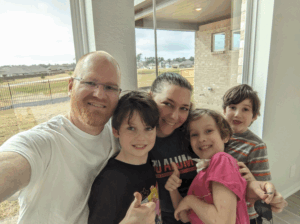
The identification of disability has proven to be tricky for our family as I have one son with autism, one daughter who is medically complex with a learning disability, and all three of my children are, for lack of a better term, “gifted,” which comes with its own challenges socially and emotionally. My youngest was diagnosed with autism three years ago at age 7; prior to that diagnosis, he experienced a speech delay as a toddler, but early intervention determined it was not severe enough to qualify for services. So “on paper,” he did not have a documented disability for most of his life. This sounds comical to me as a parent because my son has been thoroughly and consistently himself the whole time. Yet, starting three years ago, he was perceived so differently in the eyes of service providers, insurers, programs, and the associated funding.
My daughter, on the other hand, was known to be medically complex even before she was born. Our family has been involved (at times enveloped) in a complicated web of services and programs for her since then. The tricky part with my daughter is that despite being medically complex, even medically fragile according to some definitions, she has very few functional impairments. At 12 years old, she provides all her own daily medical care including cleaning and changing her trach tube. She is ahead academically and tested into a gifted identification program at a local university. The challenge we face with my daughter due to her “dual exceptionality”—having both a disability and an area of giftedness—is that programs are almost always designed for only one exceptionality. So, whether we are participating in a program centered on disability or on giftedness, we find that my daughter is “outside of the box” of the imagined participant for whom the program was designed.
Eithne Egan, Massachusetts
The process of identifying disability always made me feel sick. Reading reports, evaluations, progress notes—they are all so deficit based and while they may serve a purpose, I never saw my child in them. Identifying my son’s autism diagnosis and creating a plan for him stripped him of his humanity and personality. In the beginning I thought that identifying his disability would open doors, but the options that were offered were so restrictive and cookie cutter—not individualized for my son.
What do you think about the number of children in this study with identified disability who do not have an Individualized Education Program (IEP)?
Eithne Egan
Sometimes I think you need a degree in special education to navigate the system successfully. You need education, you need resources, you need a certain type of personality, you need social status just to go into a school district, even with a kid with clear disability, to get treated fairly. The education system can be very political when it comes to getting services. There are so many power dynamics in IEP meetings. I often felt they were set up to intimidate.
For example, I am a single parent, and that means I was often alone at those tables. I was often afraid in IEP meetings. The power dynamic can be overwhelming. So, I am sure there are children with disabilities who do not have IEPs because their families do not know or understand how to get one. But I also think there are some families who may not want their child to have to deal with negative reactions, meaning ableism from society, that comes with disability diagnoses and who may not want to subject themselves to the politics and power dynamics of trying to get an IEP. I have a friend who is in this spot—her son has a 504 but she is not sure she wants to fight to get him an autism diagnosis to qualify for an IEP, because of the fight it will require and the potential stigma of an autism diagnosis.
“But I also think there are some families who may not want their child to have to deal with negative reactions, meaning ableism from society, that comes with disability diagnoses and who may not want to subject themselves to the politics and power dynamics of trying to get an IEP.”
Ida Winters
My son was diagnosed with alphabet soup, but I guess it wasn’t the right amount or combination of letters. For years he was denied an IEP even though he had an attention-deficit/hyperactivity disorder (ADHD) and other mental health diagnoses. He was sent home constantly, received complaints from school staff, and he was suspended. He was finally diagnosed with ASD a week before he turned 14. His pediatrician referred him for evaluation many times before, but he was denied evaluation because he had been diagnosed with ADHD before. Although my son was treated more respectfully once the medical diagnosis of ASD was added to his school records, I used to work at a clinic that did developmental screenings and diagnosis for underserved and underprivileged children (majority of the families were people of color like my family). So many children came to the clinic who had been told they did not have a disability or that their families had to wait and see, but the kids and the families were struggling to get help. From my personal experience and the one working in that clinic, the results of this study ring true—there can be a big gap between having a disability and having an IEP.
Why does how we measure matter?
“Measuring matters because it is about quality of life—it is about the life of a child, not about services.”
Eithne Egan
This article clearly shows us that how we measure—and the way we ask and talk about disability—matters. If we look at disability from different lenses, we will capture important information, nuance and understanding that we did not have before. And that gets us to perhaps the most important point, what we do with the measurement, like once a child gets a diagnosis, that matters. Measuring matters because it is about quality of life—it is about the life of a child, not about services.
Ida Winters
Our children grow up thinking something’s wrong with them because depending on how we measure disability they are being told they are “not enough” and “too much” at the same time. In my experience, children tend to be ousted or isolated because they didn’t measure up enough to qualify for any services or support or if they do qualify for services, instead of making an individualized education plan, the discussion shifts to cost, and options offered are one size fits all.
Lisa Treleaven
Measuring matters and at the heart of that, the language we use matters too. For example, look at the term “gifted.” Our language for discussing exceptionality is woefully inadequate as it is often tied to ableism—a system of discrimination and prejudice that privileges non-disabled people and disadvantages people with disabilities. Personally, I consider my daughter’s medical conditions and my son’s autism to be just as much a gift as their intelligence quotient (IQ) scores.
Conclusion
Families and researchers agree—there are several ways to identify disability and how we measure matters. The family insights and stories highlighted above illustrate and underscore the far-reaching impacts that the measurement of disability can have on how children are perceived and on their access to services and their quality of life. We are living in times of deep division and polarization. The threat of dramatic loss of services, in education and Medicaid for example, looms on the horizon. The parade, slowly turning into a movement, will require a lot more of us to join in the march—perhaps measuring what matters can in this moment help to bride divides and ensure that children and families have what they need.